Do Overs and Do Nothings!

If one is emotionally fragile (and we can all be at some point,) the overall lack of service experienced today can send us over the edge.  I wrote about this last week, and ended that article being grateful for my blessings.  I still am.  What I am writing about today is a similar subject, and I remain grateful that I have very few serious problems to complain about, and this is not one of them.  But my intent is not to complain, but to help us change things that need to be changed, including changing ourselves and some of our expectations.

We are experiencing an overall lack of service, and our time is dramatically compromised.  A few examples.  There are too many do overs and do nothings.

I am writing this while waiting for a FedEx delivery that requires a signature.  I have spent most of the day at home when I need to be out taking care of other and more important business.  Oh, I have been productive while waiting, but as the day comes to an end, my patience is wearing thin.  And since I have committed most of my day to this, I do not want to cave now and have to go through the process all over again.  Thinking that I should be able to find a reasonable time window in which the delivery will be made, I went on line and called FedEx, both to no avail. The only information available is that the package will be delivered between 8:30am and the end of the day, whatever time the end of the day is!  Unacceptable.  With today’s technology, that is amazing.  The reason I was given for no more information than this by the live voice when I was finally able to get to one (a feat in and of itself) was that the package was shipped by FedEx Ground.  So what?  Why does a major company like FedEx want to upset its customers like this?  We know they have the technology, why are they not using it?

Another example.  I called the property management association that represents our beach condo on May 19th and put in an order request to get what was obviously a live bird at that point out of our dryer vent.  I even personally told the maintenance person who would likely handle the problem about it, that I had called the association office and reported it, and filled out the required service order request.  Nothing was done by them to either fix the problem, which I found out a week later when I was back at the condo, nor did anyone communicate anything about this to me.  (The condo is in a location three hours from our residence.)  I called back on May 26th when it was obvious nothing had been done, and there was a terrible odor in the dryer.  There was no more bird chirping however, so I assumed the bird had died in the vent.  Again, I was assured someone would call me back and tell me what would be done about the problem.  Today is May 31st, twelve days later, and not only has no one from the association called me back, but nothing was done to fix the problem, other than what I did.  I reported the problem to our rental agency, and they removed the dead bird from the dryer vent.  The lack of service and information from our property management association is unacceptable.  I am upset, and sad about the bird.

One more example.  Once I can leave the house (after the FedEx delivery) later today or tomorrow, one of my errands is to take back a pair of pants that I picked up from the tailor yesterday, which still have the two tears in them that they were taken to her to repair. Too much of my time is spent dealing with do overs, and I imagine you have similar stories.  This is the last time I will use this tailor.  It is not the first time for a problem of this nature with her.  I will no longer give my money and my time to this tailor who has failed to finish garments when promised, and too often her work has not been done correctly.  She even requires payment up front, which would be fine, if the work was done on time and right.  Enough do overs with this person.  I have another tailor whose work is always right and on time, and although she is a greater driving distance away, she is more than worth the distance. I only regret that some of the money she should have made from me went to the other tailor. 

What should we do about the overall lack of service?  First, we should refuse to give our hard-earned money to companies who make it difficult for us to enjoy doing business with them. Enough of the aggravations; we should be enjoying our relationship with those we support with our business.

We should expect an occasional problem.  We are not error free ourselves, so we should expect and accept graciously an occasional service problem. 

If/when appropriate, we should communicate our concern through the right channels, which is often to management, even though doing so takes time.  The problem is often a systems problem, not a people problem, which is reinforced by a quote I have used many times: “People don’t fail, systems do.”  And if the problem is a people problem, that is often also a systems problem, such as lack of training, management, and/or accountability.  If management is not made aware of our problems doing business with them, they may not have enough information to even know there is a problem.  Yes, they should know, but shouda woulda coulda gets us nowhere.  Let’s care enough to give them the information they need.

We may also need to change some of our expectations.  Things often take longer today than they should.  What we might think should only take a day, may take two or more days, whether it should, or not.  We can choose the time frame which is reasonable to us, but let’s be realistic, otherwise we will be dealing with more negativity than is good for us.  We should monitor progress, although we shouldn’t have to.  I am reminded of a client of mine who taught me this years ago. (Thank you, Render, you were so right about the need to monitor and follow up.) Yes, things should be done as expected, but they will not always be.

Finally, we should be nice.  Even when we are not getting the service we are paying for and deserve.  Which reminds me of a saying attributed to Maya Angelou. 

“I have learned that people will forget what you said, people will forget what you did, but people will never forget how we made them feel.”

Posted in life | Leave a comment

Inconveniences and Tragedies

Sometimes things just do not go as they should, and certainly not as some of us expect.  I have had some of that these past few days. And I have expressed my frustration with several people about those things, and quite assertively.  No, not assertively, but aggressively.  And while the content of what I expressed was technically correct, I was wrong in how I said what I said.  No, I did not scream, call names, or use profanity.  But I was wrong nonetheless, although I did not think so at the time.  My awareness of the error of my ways came when I compared my inconveniences to the life changing events others are experiencing.    

In the past two days, I have waited on the phone a total of more than three hours listening to “how great we are” messages and incorrect information, never having my calls answered by a live voice and a caring person who could help me. I had the time to wait since I was a passenger in the car for most of that time, so I waited.  I was curious about how long it would be before someone answered the phone, and no one ever did.  The phones were obviously jammed with callers who were unable to get the information they needed due to problems with the company’s new “enhanced” website.  I also went on the new website, and spent at least two hours trying to log on, establish a new user name and password and answering security questions, only to be bumped off each time.  Being a customer advocate, I was diligent about escalating my concern to other departments than the one which should have been able to help me, but couldn’t.  In essence, I wasted five hours of my time.  I still do not have the information I need, and do not know when I will.  The last person I spoke with about the problems in their system told me to wait forty-eight hours and call back.  Imagine!  I cannot describe how upset all this lack of service made me.  Even worse was the waste of my time.  As my friend, Judy, has always said, “Waste my food and even waste my money, but do not waste my time.”  Time lost can never be recovered.

I don’t know why I thought I should call another service company and try to solve another problem when I was so upset by the lack of service of the first company, but I did, and also, to no avail. I called the cable company to ask why my bill is increasing for a change in service I did not request and do not need.  That call resulted in me being even more frustrated. The answer I was given was that the (new) company owner was streamlining the offerings to customers, and the bandwidth I had was no longer available.  After hearing how the increase in my monthly payment was only $20, (remember, for a service I did not need and did not request!) I finally told the service rep that I was being forced to consider another vendor, although I did not want to.  I heard no empathy in the service rep’s responses, so I decide to not waste any more of my time or his, and ended the call.  But I was not happy.

While I was still fuming about these two very frustrating events, the evening news came on.  The lead story on the local news was about a tornado destroying the homes of some people in Sampson county, NC, a county close to my area in North Carolina.  The news of the devastation the people of the area suffered immediately took my mind off my inconveniences, and put my blessings into clear focus.  The people of Sampson County are dealing with much more than inconveniences.  I felt immediately not just grateful, but guilty.      

The national news further compounded the difference in inconveniences and tragedy. The news of the bombing and killing of innocent people, children and young adults out for a concert in Manchester, England, made what I had been dealing with so trivial.  While I had been fussing and fuming about lack of phone response, website glitches, and increase in payment for services I do not need, people were dealing with the senseless loss of their children and their homes.  I had only lost time and money, while people in Sampson County, NC and Manchester, England lost so much more.  How quickly our problems can pale when compared to the problems of others.  Shame on me for not being able to deal with life’s inconveniences in an adult manner, without letting them ruin my day and the day of those whom I vented my frustration upon.  The difference in these experiences reminded me of what another friend, MoMo, has said more than once about me; I am usually calm with major challenges, yet can be thrown into a tailspin by minor things.  I need to change how I deal with the latter. 

Systems are not error free, and people will not always meet our expectations, nor will we meet theirs.  Such is life.  But these should be seen for what they are, only minor disruptions, not major problems.  My behavior needs to reflect that I truly understand the difference.

I usually write what I need to learn.  This one is for me. 

Posted in life | Leave a comment

Looking for Love in all the Right Places

Mother’s Day has come and gone, and Father’s Day is soon to be upon us.  While we have many holidays throughout the year, Mother’s Day and Father’s Day have a special connotation. There are probably no other holidays that have the emotional issues attached to them as these two.  Of all the relationships we have in life, our relationship with our mothers and fathers are among the most important. 

Now, we are not naïve enough to think that all mothers and fathers are good and nurturing, and that our relationships with them sets us up for success in our future endeavors.  There are mothers and fathers who are ill equipped for parenting, and while many of them do their best to be for us what we need, some of them fail in that endeavor.  When we have lived enough years  to understand these things, we can put them into the proper perspective.  While as children we may look to our parents for love, as adults we sometimes need to move past these childhood desires and look for love in different places. 

Some reading this have accepted their parenting situations and no longer expect their parents to be what they incapable of being.  In some of these situations the children have become the parents of their parents. 

Others reading this have chosen their friends as their family, finding in them the nurturing and love that escaped them in their nuclear families.  Many find in their friends the families they never had. 

Then there are those who have created the families they wished they themselves had experienced.  These individuals are blessed to have been able to rise above their circumstances, to not expect anything more than they receive from their families, and yet who have created the families they wished they had been given.

Where are you looking for love?  Is it in the wrong places?  Are you expecting something from others that they are not able to give?  As adults, we should be mature enough to look for love in all the right places.  But, what are those places? 

Look first within.  Look within yourself to find the love that you are missing from others.  Not in an arrogant way, but in a self-confident way.  If you love yourself, you will likely be more loving to others.  It just does not usually happen the other way around.   

Then look to those who show you love in the ways that matter.  Those who cherish you, who use loving words when they speak with you.  Those who do not put you down.  Those who are not competitive with you.  Those who show you in a myriad of ways that you are important to them.  These are the people whom you can count upon. 

If you are blessed enough to have grandchildren, grandchildren who know how to show love, you are blessed indeed.  Children are not usually good at hiding their feelings; if they like you, you know it; and if they don’t, you know that as well!  And when your grandchildren love you, that is love beyond measure!

Looking for love in all the right paces.  That can be from within.  It can also be with others, others who you know from experience love you.   

And those grandchildren; WOW; love beyond measure!

Posted in family | Leave a comment

Call Your Mother!


Mother’s Day is here again, the one day in the year that we are encouraged to honor our mothers.  And mothers should be honored.  There is no one else who has given more for her children than a mother.  Now, I need to qualify this some.  All mothers do not meet this standard.  There are some mothers who for different reasons are not nurturing, who do not give their children what they need.  Some of you reading this had a mother like that.  Some of you have nurtured your mothers, have been to your mothers what they could not be for you.  God bless you.  You have been able to rise above your circumstances and be for others what they should have been for you.  You are given permission to skip most of the rest of this, for it does not apply to you.

A few other qualifiers, or disqualifiers, are in order.  I feel somewhat of a hypocrite writing this.  My mother passed away in 1998.  You can read my love story to her in my May 4, 2016 Blog Post, which you can access at www.fralixgroup.com.

My mother and I had a troubled relationship for many years, and I did not do what I am recommending that you do to honor your mother. Oh, how I wish I had more time to do so.  But when time is over, it is over.  That is one of my main messages.  I learned that lesson the hard way.

I want to make it clear that I am not referring to my children in these words.  If they find themselves here, so be it.  But I am not using this platform to send them a message I do not have the courage to deliver to them in person.    

I have had several conversations with mothers lately, and the themes in those conversations are similar.  When talking about her daughter, one woman said, “How do I say this kindly?  Well, I will just say it.  My daughter is indifferent to me.”  This mother moved to the town she lives in to be close to her daughter.  And her daughter is indifferent to her?!  Go figure.  This daughter is a high-powered executive who makes a lot of money. I hope her money keeps her company in her later years, for I don’t know if she will have relationships that will.  Her mother seems to be resigned to the reality of their relationship, and has an otherwise full life, but how sad that she and her daughter do not have the relationship they could. 

I spoke with an older couple whose son and family live near them. There have been some health issues with their son recently, and we were talking about how he is.  They looked so sad when they said, “You know, we don’t really know what is going on. They do not call, and don’t seem to want us to.”  This couple moved to the area where their son and family live to be closer to them since they, the parents, were getting older; but for what reason?  To be faced with the reality that the relationship is not what they would want it to be?  It would be easier to be states away and be able to excuse the lack of attention being due to the physical distance.

We are encouraged to buy presents for and/or send flowers to our mothers in honor of them on Mother’s Day.  I love flowers and gifts, and many other mothers do as well.  But that is one day, and that is easy.   What are you doing the other 364 days of the year?

Do you call your mother just to see how she is doing?   And I do mean call, not text or email.  Your mother loves to hear your voice, wants to talk to you, to have conversation with you, to catch up on what is going on in your life and in the lives of your family.  If you only call to give information, and fail to ask how your mother is doing, you are missing an important  connection.  And you can call at least once a week; that doesn’t take much time, does it?  What are you doing that is more important than checking in on and talking to your mother?  Believe me about this; you will long for time to talk to your mother when she is gone. 

There is more that I could say, but nothing more important. 

Just call your mother.


Posted in family | 2 Comments

Saving Money by Spending Money


Since the recent publication of my book, A Year in the Life of a Recovering Spendaholic, I am more conscious of saving money.  And I don’t mean saving money just by not spending money, but by intentional spending.  Although I was successful (with one mistake!) when I chose to not purchase anything for myself or our home for an entire year, there are, of course, things that I now purchase.  It would be foolish to think that one will never purchase anything.  It is true that Americans especially spend sometimes with abandon, and have so many things that they can’t find what they have when they need it.  This fact was reaffirmed recently when I cleaned out my closet.  I am now wearing a blouse that I “lost” in my closet that still had the tags attached!  Nevertheless, most of us do spend, and if we spend intentionally, we can save money. 

I was in NYC recently and was taking a long walk down one of my favorite streets, Madison Avenue.  I was not planning to purchase anything; I was just out for a walk.  I was exploring the side streets to Madison Avenue, and noticed a shoe store of a brand that I love.  I have not actually purchased their shoes before, since I have not found them to be affordable.  I went in, and to my delight, there was a sale on their winter boots.  I found a pair of boots that were on sale for only a third to a fourth of their usual cost.  Now, it isn’t boot season, but it will be again soon, and when it is, those same boots will be back to full price.  I had looked for new boots a couple of months ago during the end of the season sales, yet could not find any that I liked that were affordable.  It is amazing to me how much footwear costs these days, and that people are paying those prices!  I love quality, and there is a relationship to quality and cost, yet not to the degree that some designers charge. So, I will not usually purchase some brands that I love unless they are heavily discounted. 

Yes, saving money in this manner does take time, and time is money.  We do need to factor in the cost of our time in these decisions.  But in this case, I was not even looking for boots; they just jumped out and grabbed me!  Even better, there was no tax if they were shipped to me, and shipping was free!  So, I now have new boots, and for a fraction of their full price!  And the salesperson said that these same boots (with such a minor variation it will not be noticeable) will be in the fall line.  Since I don’t follow trends, if they weren’t, that would not bother me, but that is a bonus in this case.

I have another example of saving money by spending money.  My make-up is not inexpensive, and never goes on sale.  But fairly frequently the store where I purchase it has storewide sales with a certain amount of a gift card given based upon how much one spends.  I pay attention to when those sales happen, and wait to purchase what I need when I can benefit from them.  Another example of saving money by spending money.

What about coupons?  Do we save money when we use coupons?  Yes, and no.  If we use coupons to purchase items we would have purchased without the coupon, then yes, we save money by doing so. However, if the enticement of the coupon gets us to the store to purchase items we would not have otherwise purchased, then no, that is not saving money by spending money.  The same is true for sales.  We should be smarter about these spending decisions.  It is much better to buy items we need when they are at full price than to buy items we might not even want just because they are at a reduced price.

This is all about intentional spending of items we need, and fully understanding the difference in our needs and our wants. 

Posted in Uncategorized | Leave a comment

33 Years and Counting!

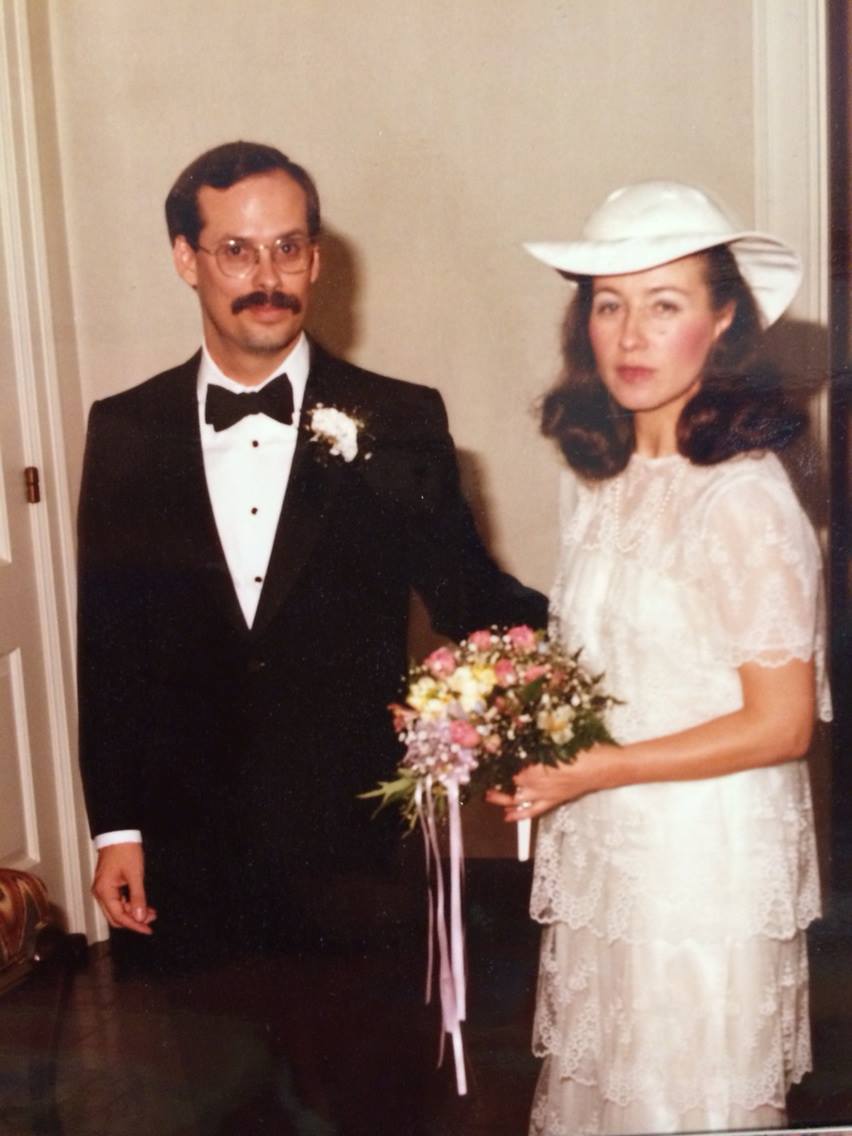
Today is Mike’s and my 33rd wedding anniversary.  It is hard to believe that it has been 33 years.  When we married April 28, 1984, we committed to each other and to our two daughters (one from each of our previous marriages) that we would be family for the long term.  Although 33 years is long term, I hope that we have many more years together.  I feel so blessed that Mike and I met and married.  He is indeed my soul mate.  We have had a blessed life together.

As I think about our long marriage and how it has lasted when so many others haven’t, including our own first marriages, I think there are three keys to our marriage’s success. 

First, we made a commitment.  Those of you who have read my writings before know that I use the word commitment intentionally, and that to me a commitment is different than a plan.  Most people plan to be married for the long term when they make the marriage decision.  Some even have a commitment, but things don’t work out as they planned.  Sometimes one of the partners in the marriage is committed, but the other one isn’t.  A marriage that is going to withstand the challenges that surely will come requires that both people be committed.

Another key to a long term successful marriage is that the individuals complement each other, not compete with each other. When people are too much alike, they can fight for control.   When they complement each other, they depend on each other; their strengths are complementary, and so are their weaknesses. They need each other in a way that people who are too much alike do not.  This need is not a weakness, but a strength. They do not lose themselves in each other; they become more of their best selves with each other.  While it is certainly possible for couples to be happily married when they are more alike than different, I do believe that differences in the personalities adds a dimension to a relationship that strengthens it.  It is necessary to understand and value the differences, and to see those as complementary, not divisive. 

A third key to a long term successful marriage is that both partners respect each other, not just love each other.  Love can ebb and flow, and when one must dig down deep to find the love, respect is what sometimes helps to weather the storms when the love needs to be rekindled.   If respect is lacking, it is easier for the daily challenges that can occur in any marriage to become insurmountable.  If each person truly respects the other, their behavior will be respectful.  They will want what is best for the other, not just what is best for themselves. They will be committed to what they have built together and protect it, not allowing anyone or anything else to come between them. 

This is not intended to be an all-inclusive list.  There are other variables that are involved in a successful marriage.  But a marriage that involves commitment, effectively managing the differences each brings to the marriage, and respect for each other has served Mike and me well for these first 33 years.  Now on to the next 33! 

Posted in life | Tagged , , | 11 Comments

Managing Our Emotions

We all have a range of emotions, some good, some not so good.  Well, I should change the word “good” to “positive” and “bad” to “negative.” Emotions should not be thought of as good or bad, but positive or negative.  “Good” and “bad” labels put us in the position of judging, and emotions should not be judged.  While we should evaluate them, and determine how to manage them most effectively, that is different than judging emotions as good or bad.

It is good to be in touch with our emotions, all of them, and to not “stuff them down.” If we fail to deal with our emotions, they can become more problematic. We heard about the problems this can create from Prince Harry earlier this week.  But how we deal with our emotions is the key.  Sometimes our negative emotions come between us and others because we do not deal with our own emotions effectively.  That can become cumulative, and what could have been resolved develops into conflict, expressed (overt) or unexpressed (covert).

What are some negative emotions?  Hurt, anger, frustration, envy, and sadness are some of the most common negative emotions.  If these are unresolved, other negative emotions can occur.  Unresolved hurt can become anger, anger which can be directed at others.  Frustration sometimes comes from our inability to control our situation, and can result in us trying to control others.  Envy is coveting what someone else has, and can lead to sadness and even depression. Sadness that isn’t intercepted leads to depression.     

Joy, gratitude, empathy, happiness, and hope are some positive emotions.  As is the case with negative emotions, positive emotions are often related. The person who has a spirit of gratitude is usually happier and perhaps even joyful.  Those who possess empathy usually also have a spirit of gratitude.  People who have hope also are usually happier. 

We all possess both positive and negative emotions, and these are often the result of allowing external factors to control how we feel.  We need to examine this.  Why would we allow our happiness to be dependent on how many “things” we possess, how we look as we age, and even the opinion others have of us?  If we need the latest Apple product or the latest fashion to feel good about ourselves, we will likely have too many days of negative emotions such as envy or sadness.  If we are depressed or even sad as we notice we no longer can color the gray in our hair or hide our wrinkles, we are likely to be unhappy most of our days, and miss the joy those years can provide.  If others disagreeing with us makes us hurt or angry, we will miss the opportunity for polite discourse that can result in mutual understanding and even deeper relationships. 

When dealing with emotions, it is best for us to look within, and refuse to focus on the behavior of others.  You have heard, “The only one you can control is yourself.”  If I control my own behavior as I deal with my emotions, that will be more than enough for me to do.  There won’t be time for me to worry about the emotions and behavior of others!

Posted in Uncategorized | Leave a comment

My Spendaholic book is Changing Me, Again!

Last week’s Blog Post was about my latest book being published, A Year in the Life of a Recovering Spendaholic. Thank you to all who sent me such wonderful comments.  It is indeed very exciting!  A friend has a book launch party scheduled for me in Raleigh, and my two book clubs have selected Spendaholic for our May readings. And there are other book promotion activities planned.  I am honored and blessed.

If/when you read the book, you will find that I state that the book is about me changing a behavior I needed to change, and that if others are inspired to change, that is great.  But I knew I needed to change, and the year of no spending changed me in three significant ways.  One, I made a commitment, not just a goal or a plan.  Commitments are stronger, and once made, not easily broken.  Two, I am no longer (usually, that is) an impulsive spender.  I am able to walk away from a purchase, knowing that if I decide to buy it later, it will often still be available, and if not, that is ok.  My third change is that I also do not (again, usually) waste money.  An example is choosing to have water with lunch instead of watered down tea that isn’t worth the money it costs.  I know some of you are thinking, “that is small money,” and yes, it is, but small money adds up.

I realized years ago that one reason for my spendaholic behavior is that I have a need for beauty; a need, not a want.  So, when I see beautiful things, and especially if they are at a good price or on sale, my temptation to purchase them is very strong.  Too often those have become impulsive purchases.  Later, I have sometimes, or even often, found that they do not fit where I plan to use them.  I had a great example of this yesterday.

I purchased a beautiful loveseat several years ago for our beach condo.  When doing some redecorating a few months ago, my decorator stated that the loveseat was too big for the space it was occupying.  I saw it through her eyes, and realized that she was right. But since I loved it, I couldn’t get rid of it.  I put it in my storage shed.  Yesterday I decided that I needed to do something with it, but what?  I almost convinced myself to recover it and use it somewhere else.  I called an upholsterer and got a price and fabric yardage needed, and loaded it in the van, planning to transport it from the beach to Raleigh, then to the upholsterer almost an hour away from Raleigh.  Then I came to my senses. I realized that I was going to spend too much money to try to make the loveseat fit somewhere else, and in so doing, I would be having to decide what to do with the item that is currently occupying the space where the loveseat would go!  That would likely result in spending more time and money, and I might not be any happier with the change.  This was spendaholic behavior at its finest.  I decided to make a different decision.  Instead of my plan to reupholster the loveseat, I took the loveseat to a consignment shop. 

Motivational guru Jim Rohn said many years ago that one positive change results in more positive changes.  He used the example of eating an apple instead of something unhealthy, and that in doing so, it becomes easier to get outside and take a walk.  I find that to be the case with the publication of Spendaholic.  The book’s lessons are so much on my mind that I feel like a hypocrite if I waste money.  Recovering that loveseat would have been an example of wasting money.  The loveseat is “sunk” cost, it is money already spent.  But spending more money to try to make it fit somewhere else would be foolish.  While I have done just this many times in the past, I now want to permanently change that behavior. I believe I took a significant step toward that with this loveseat decision.  There are other items in the storage shed that I need to deal with in a similar fashion.

One of my commitments for 2017 is mindfulness.  I want to be more mindful in general, and to be a more mindful spender in particular. To do so, I will need to make different decisions about spending than I have in the past. 

There are only three decisions we can make about money which we already have.  We can spend it, invest it, or keep it.  If we invest it, it can grow; it can also lose its value.  If we spend it, it is gone.  While we may be spending it wisely, the money is still gone.  If we keep it, it doesn’t grow, and inflation may result in the money being worth less, but that is still better than not having it at all. 

Now, I assure you, I am not an expert on money.

But I do know a lot about spendaholism, and how to change that.

Here is the link to the book: Click here

Posted in Uncategorized | Leave a comment

My New Book Is Live!

More than ten years ago, I began a journey, a journey to address my Spendaholic behavior.  I wanted to be in control of my spending, and to do so, I knew that it would require major change.  I decided that major change does not happen in thirty days, or sixty days, or even ninety days.  I decided that for me to change my behavior would require at least a year. So, I made a commitment that would last for a year.

I made a commitment to not purchase anything (non-disposable) for myself or my home for a year.  During that year, I journaled the journey.  I journaled my thoughts, feelings, and insights, to connect to the lessons that I needed to learn to change my behavior.  I had planned to publish this book soon after the year of no spending ended, but I did not.  Even so, the lessons contained within the book are timeless. 

A few months ago, I decided it was time for this book to be finished, and engaged Write Way Publishing Company to help me get this book to print.  And we have done so!   My journal journaling my journey, A Year in the life of a Recovering Spendaholic, is now in print and in eBook form, and is available on Amazon. 

I invite you to take this journey with me, to see how I struggled, and how I succeeded.  In so doing, you may find that some of my lessons connect with you.  It is more important that you uncover your insights than that you read about mine.

In “Spendaholic,” I hope that you laugh some, learn some, and grieve some.  Laugh about my foibles, and maybe your own.  Learn about how I conquered some of my challenges, and how to conquer yours.  And grieve some, grieve with me over my losses, and your own, and my and your failure at times to be our best selves. 

And in the end, rejoice in the human spirit, that part of us that allows us to change things that are so difficult to change, to become what we are more than capable of being, to be our best selves! 

I invite you to take this journey with me, by clicking HERE

Posted in life | Tagged , , , | 1 Comment

Human Skills Can Change the World for the Better!

We seem to need a reminder every now and then of the importance of what I refer to as Human Skills.  Human Skills refer to our communication skills and our ability to connect well with others. While these are sometimes called “Soft Skills,” I prefer to call them “Human Skills.”  In our society, when compared to “Hard Skills,” “Soft Skills” are not valued as much.  I just googled “Hard Skills,” and found the following, which proves my point.  “Hard skills are specific, teachable abilities that can be defined and measured, such as typing, writing, math, reading, and the ability to use software programs.  By contrast, soft skills are less tangible and harder to quantify, such as etiquette, getting along with others, listening, and engaging in small talk.”  Do these definitions seem to value one of these types of skills more than the other?  I think so, since something that can be defined and measured is more valued by many in our American society than skills that are less tangible and harder to quantify.  In our macho society, “hard” can also be thought of as aggressive, (in a good way) and “soft” is more often considered weak.  That is one reason for my recommendation that what is usually thought of as “Soft Skills” should be renamed “Human Skills.”  I believe that the most successful people have a combination of both Hard Skills and Human Skills.  Hard Skills are often a requirement in many jobs.  Human Skills should be a requirement in all jobs. 

Just think about it.  Think about the people you know who you are always glad to see, and those who you aren’t.  It is likely that those people who you are glad to see have good Human Skills, and those in the other category do not. Think about the people who are nice, friendly, and listen at least as much as they talk.  These people have human skills that allow them to connect well with others.

Sometimes it is easier to describe the opposite of something than it is to describe what it is.  People who lack sufficient human skills do not speak to others when they enter a room, and do not say goodbye when they exit.  Greeting others and saying something appropriate when leaving a room are important human skills.  People who have a long conversation with one person when there are others around lack human skills.  Someone who does so much talking that others can’t engage in conversation with them lacks human skills.  People who go to networking events to collect business cards and interpret what they are there to do as engaging in small talk lack human skills.  Yes, being able to make small talk (whatever that is!) is considered an important networking skill.  A far better skill is the ability to connect with others, which requires engagement on a different level. 

We have many current examples on TV news channels of people not listening to others, talking over others, and being condescending to others.  And then, there is the too common skirting the issues, blaming others, and even outright lying.  People who engage in these behaviors may have great Hard Skills, but they lack Human Skills that would result in them being trusted.  That makes it so much harder for them to do their jobs, regardless of their Hard Skills.

Etiquette is involved in communication and relating well with others, but it is a broader subject worthy of its own post.

It would behoove us all to brush up on our Human Skills.  And we cannot look to many in the media for how to behave.  Unless we are looking for examples of what NOT to do.

Back to the definition mentioned earlier of Hard Skills and Soft Skills.  I disagree with the premise that Human Skills (referred to above as Soft Skills) are less tangible and harder to quantify.  The fact that they may seem to be is probably because they are not as common.    Will you join me in changing that?

Posted in Uncategorized | 4 Comments